
I am still steamed about kids and playtime being treated as unimportant and easy. Years ago, when I was an early childhood educator and curriculum developer, I can still recall how the principal used to evaluate the success of our teaching career- it was by checking the happiness level of the children. This happiness level was not assessed by counting how many of them smiled and laughed, but rather by how much they were engaged in the play-based activities and how eager they were to return to the classroom. Generally, our mindset about what learning should look like is still stuck in a time when we separated learning and playtime. However, it is essential for us, as educators, to recognise that this distinction between play and learning time is entirely false. As teachers, if we understand gross and fine motor skills, then we know that the children must be engrossed in specific activities or play-based learning where the learning is happening more organically with just the right amount of guidance. Free play also lets the children learn, but play-based learning will be a little more organized and will have specific objectives to meet. For all the early childhood educators, you must know that there are several kinds of play-based learning.
1. Cooperative Play: As the name suggests, this kind of play happens when children engage with their peers’ sharing toys or just having interactions, developing their language and communication skills. It teaches them how to share, cooperate, and problem solve. They play as a group, which enhances their social relationships and fosters teamwork.
So, what are the kinds of activities you can give them to have cooperative play?
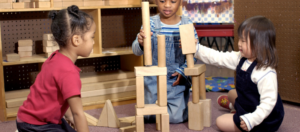
Role plays, imaginative storytelling activities designed for groups, board games, and solving puzzles together will enable them to enhance their social and communication skills.
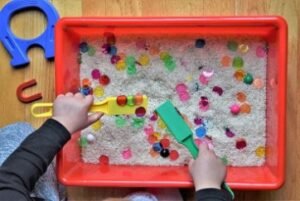
2. Sensory Exploration: I am so glad that this one has become a part of most of the pre-school classrooms in India these days. Sensory exploration is related to enhancing Children’s senses like touch, smell, taste, sight and hearing. This kind of play-based learning refines the fine motor skills of the children. It also supports cognitive development.
There are various activities that a teacher can plan to implement more sensory exploration in her/his classrooms. Creating a sensory bin for your students is one of the best ways to engage them in sensing various kinds of textures, sizes, shapes and colours. At the outset, it might look very simple and that the children are just playing, but what you have created as a teacher is a base for them to get familiar to various objects present around them. One can use sand or water to make the sensory bin even more fun for the children. Another activity you can implement is children creating their own play doughs with the help of wheat flour, salt, citric acid, oil and food colour. It can be stored for a long time, and they can get a sense of achievement by creating something for themselves.
Parents can engage their 3-5 years old kids in the kitchen with caution and proper guidance. Here, one doesn’t need to create any activity as such, but the child learns and enhances all his/her senses while being a part of the cooking or baking process.

3. Pretend Play: These are dramatic plays where a child steps into various characters and starts making sense of real-world problems. These pretend plays emotionally develop a child by putting them in different situations, mostly trying to resolve a problem. It fosters empathy and cooperation and enhances their communication and problem-solving skills. A teacher can use props and objects to enhance their pretend play experience. A closing circle and questioning them about the characters and the story can also help children to reflect and understand various real-life scenarios better.
Including doctor’s office, teacher-teacher, shopping in a grocery shop, house-house are some great ideas to engage them in pretend plays. The teacher may choose to make it more guided by including life skills such as using a first-aid box, cleaning the house, brushing your teeth, changing a bulb, feeding the pet, etc.

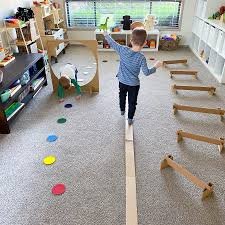
4. Physical Play: This, according to me, is the need of the hour, as children these days are spending significantly more time on screens than ever before. Physical play engages children’s bodies and enhances their gross motor skills. It creates spatial awareness, builds stronger muscles and helps them enhance their coordination. Through this kind of organised play, they get the opportunity to channel their energy and be more active and healthier.
Teachers can try including yoga through storytelling, Zumba on children’s songs or positive affirmations and obstacle plays in the classroom. Trust me, you don’t have to be an expert in these; just use your creativity, and you will end up having fun with your toddlers!
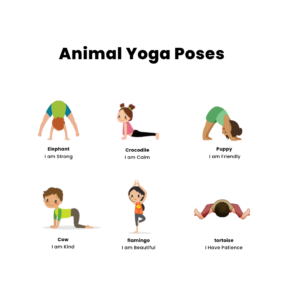
Try these out in your classrooms and see how your children have fun while learning.
By Pradipti
Lead Trainer
LETTER